Loading...

Uncertainty Created By Us: SC Re-Examines Its Own Green Order

The Chief Justice of India (CJI) recently expressed discontent with the Supreme Court’s May 2025 judgement that prohibited granting post-facto Environmental Clearances.

Examining the judgement of the ‘Vanashakti’ case, CJI Surya Kant said the ruling had created unnecessary uncertainty, leading the Supreme Court itself to unpredictability.

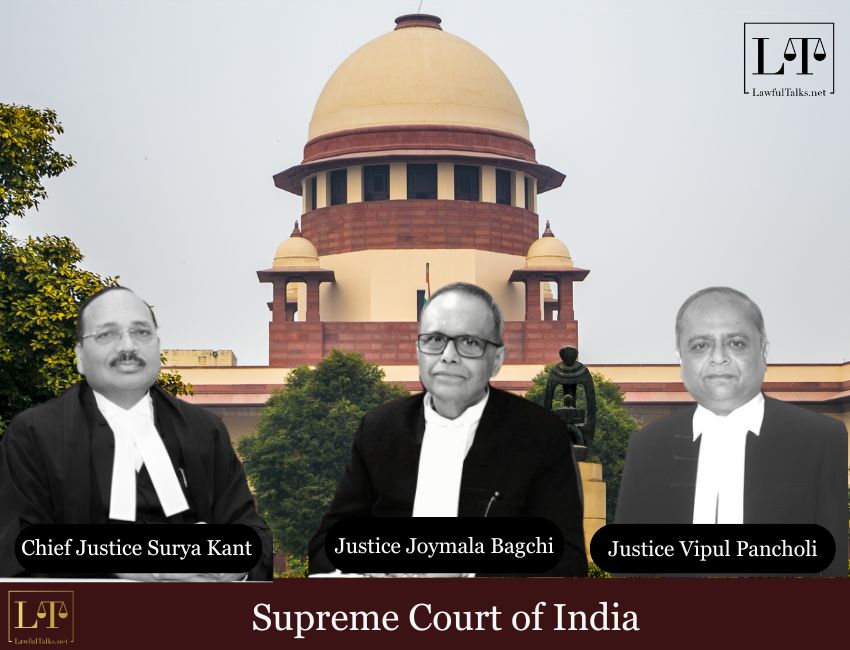
A Bench of CJI Surya Kant, Justice Joymala Bagchi and Justice Vipul Pancholi was examining whether two Office Memoranda (OMs) issued by the Union Government- which allow ex-post facto Environmental Clearances– are legally valid.

Facts:

In November 2025, a three judge bench recalled the May 2025 judgement allowing the grant of ex-post facto Environmental Clearances and restored the cases to the file. The question before the CJI’s bench was whether this November 2025 order effectively upholds the Union Government’s Office Memoranda issued in 2017 and 2021, which permit the grant of ex-post facto Environmental Clearances.

Public Projects Affected By Judgment:
Solicitor General of India, Tushar Mehta, brought before the Chief Justice’s bench several public projects that were put into uncertainty because of the May 2025 judgment. These included a mining project of SAIL (Steel Authority of India Limited), a fully constructed airport in Karnataka, and the construction of a cancer hospital and a District Collectorate office in Tamil Nadu, which are now stalled due to the ruling.

The petitioners clarified that the review judgement did not clearly decide the validity of the Office Memoranda (OMs). They said that although the earlier judgment invalidating the OMs was recalled, the main case has been restored to the file for fresh consideration.

Court’s Observations:

Bench Says Ruling Contrary To Precedents
The bench said the May 2025 judgement went against the earlier Supreme Court precedents, and that the review judgement contains observations approving the 2017 and 2021 OMs. Justice Bagchi also referred to paragraph 140 of the review judgement, which disapproved of demolishing completed projects.

CJI Kant noted that the review judgement said the Supreme Court’s Common Cause precedent did not bar the grant of ex-post facto Environmental Clearances. Similarly, Justice Bagchi said it needs to be considered whether the observations in the review judgement are “binding precedents” or only tentative views meant to reopen the issue.

Justice Bagchi further explained that the basic rule of a review is that it only sets aside the earlier judgment and does not decide the case finally.

"The thing to be seen is if the finding binds us. It is by a coordinate bench," Justice Bagchi noted.

Lawyers in court also referred to the dissenting opinion in the review judgment. It said earlier precedents — Common Cause (2018) and Alembic Pharmaceuticals (2020) — had clearly ruled against granting ex-post facto Environmental Clearances. Because of this, the judgments that upheld the 2021 Office Memorandum (OM)D. Swamy v. Karnataka State Pollution Control Board (2021) and Pahwa Plastics Private Limited v. Dastak NGO (2023) — were considered per incuriam.

CJI Criticises Two-Judge Bench Approach:
After noting this, Chief Justice Surya Kant expressed displeasure with the approach of the two-judge bench, saying it should have “considered the entire case law at that time before taking a view instead of unnecessarily creating uncertainty.”

Accepting the review bench’s per incuriam finding regarding the May 2025 judgment, the CJI added that the present bench would hear the case with an open mind.

The Bench was also informed about a recent notification issued on January 20 by the Ministry of Environment and Forests, which is waiting for the Supreme Court’s final decision.

The matter is to be examined on February 25.


Case Details: Vanashakti v Union of India W.P.(C) No. 1394/2023 and connected cases.
Smoke & No Pension: SC Denies Army Veteran Disability Claim

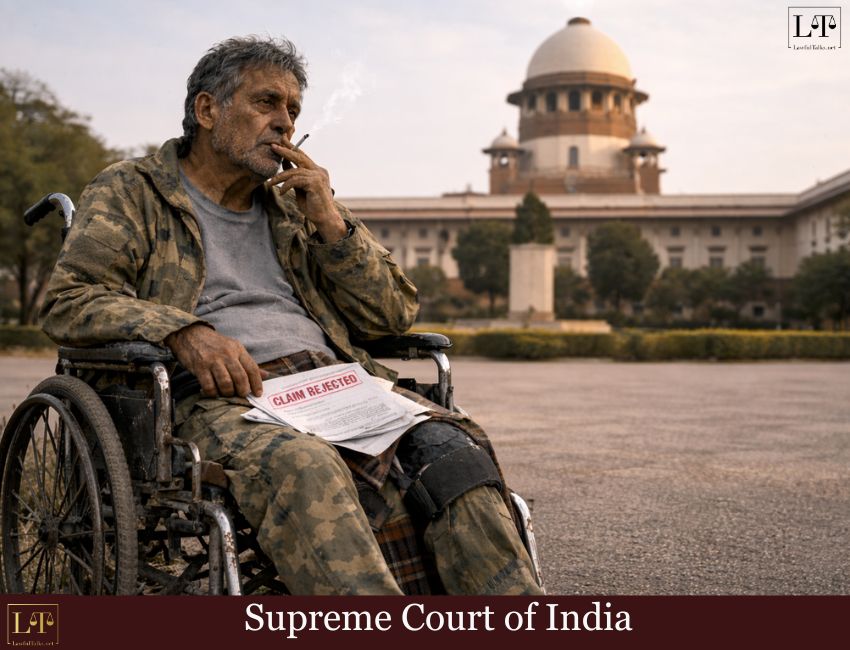
The Supreme Court dismissed a disability compensation claim filed by a former Army serviceman. It held that his illness was caused by his daily habit of smoking about ten beedis, and therefore could not be linked to his military service.

Rules Bar Compensation For Tobacco-Related Illness:

Referring to Regulation 173 of the Pension Regulations for the Army, 1961, and paragraph 6 of the Guide to Medical Officers, 2002, the Court said that “compensation cannot be awarded for any disablement or death arising from intemperance in the use of alcohol, 'tobacco' or drugs or sexually transmitted disease, as these are the matters within the member's own control.”

Justice Aravind Kumar and Justice Prasanna B. Varale affirmed the Armed Forces Tribunal's ruling, noting that medical records clearly mentioned the appellant's habit of smoking ten bidis everyday.

The appellant was in the habit of smoking bidis that too ten bidis per day and it is trite position of medical law that an ischemic stroke occurs when a blood clot or fatty plaque (atherosclerosis) blocks an artery leading to brain, restricting oxygen which reduces blood flow and causing brain tissue damage and the medical opinion categorizing risk factors includes high blood pressure (hypertension), smoking, diabetes, high cholesterol, i.e., dyslipidemia, obesity and atrial fibrillation,” the bench remarked.

The Court determined that the “Stroke Ischemic RT MCA TERRITORY” suffered by the appellant was neither caused by nor aggravated by his military service, so it did not qualify for disability compensation under the Pension Regulations for the Army, 1961.

Siachen Precedent Held Inapplicable:
The bench rejected the appellant's reliance on Bijender Singh v. Union of India & Ors. (2025), saying it was based on different facts. In that case, the appellant had served at the high-altitude Siachen Glacier, and the Court rejected the Medical Board's opinion that a 15–19% disability was not related to service. No similar conditions existed in the present case, so the precedent was not relevant.

The appeal was therefore dismissed.


Case Title: SAREVESH KUMAR VERSUS UNION OF INDIA & ORS.


Legal Black Hole: SC Notices Centre, UP Over Missing Shariat Procedure

The Supreme Court on Monday issued notices to the Union Government and the State of Uttar Pradesh, asking them to explain why rules under Section 4 of the Muslim Personal Law (Shariat) Application Act, 1937 have not been notified.

A Bench of Justice Sanjay Karol and Justice Augustine George Masih raised this issue while examining whether this provision has actually come into force in the state.

Why Section 3 Cannot Be Used:

The court highlighted a major problem: without these rules, Muslims cannot properly file the declaration under Section 3 to choose Shariat Law for personal matters such as marriage, maintenance, inheritance, and guardianship. Once this declaration is accepted by the designated authority, it becomes binding on the declarant and their heirs.

Section 4 requires the state to prescribe how this will be done — the form, the authority and the procedure — so that wills under Shariat can be legally recognised. However, no such rules exist, creating a procedural black hole.

Case Background:

The issue came up in an appeal filed by Gohar Sultan, daughter of late Mst. Nawab Begum. She challenged a 2011 Delhi High Court judgment that rejected her mother’s 1992 will because it did not meet proof requirements under the Indian Succession Act, 1925.

The High Court refused the will since the only attesting witness turned hostile. Also, there was no formal declaration under Section 3 by the testatrix to apply Muslim Personal Law, so the stricter secular rule requiring two attesting witnesses was applied.

The appellant’s lawyer argued that such a declaration could not be made because Uttar Pradesh never framed the rules required under Section 4. The Bench noted: “It is brought to our notice that thus far, there is no compliance of Section 4 thereof.”

Centre & UP Added As Parties:

Because of this, the court decided to add the Union of India (through its Secretary, Department of Legislation) and the State of Uttar Pradesh (through its Chief Secretary) as respondents, as the testatrix’s connection with Uttar Pradesh prevented her from filing the declaration.

The case will be heard again on February 18, 2026.The newly added parties have been directed to file affidavits on the “latest status.”


Case Detail: SMT. GOHAR SULTAN VERSUS SHEIKH ANIS AHMAD & ANR.