Loading...

After This Case, SC Says Bail Applications Across India Won’t Be The Same

The Supreme Court bench comprising Justice Ahsanuddin Amanullah and Justice R Mahadevan has directed High Courts to ensure that every bail application clearly discloses all necessary case details, specifying that certain essential particulars must be included. This direction came while the Supreme Court was hearing a case relating to a bail order passed by the Allahabad High Court. The High Court had granted bail to an accused charged with obtaining a fake LL.B degree and allegedly running a racket supplying forged LL.B degrees.

Background of the Case:

The case arose from a dispute over a grant of bail to Mazhar Khan,who was accused of obtaining a fake LL.B degree from Sarvodaya Group of Institutions.The FIR also alleged that he was running a racket supplying forged degrees and had circulated visiting cards displaying degrees of LL.B., LL.M., and Ph.D. He was granted bail by the Allahabad High Court.

Defence Taken by Mazhar Khan:

Khan argued that the LL.B. degree was genuine and had been legally and validly issued by Sarvodaya Group of Institutions. He also contended that there was no valid proof that he supplied forged degrees to anyone and that the allegations against him were false and facetious. He further submitted that he had no criminal history and had been in jail since April 28, 2025. The accused also alleged that his sister-in-law, also the complainant, has falsely implicated him in this case as a result of a property dispute between them.

Allahabad High Court Grants Bail:

The State and the complainant’s lawyer opposed the bail request, arguing that the applicant’s innocence could not be decided before trial and that he should not be released. However, the High Court granted bail, observing that there was no strong material to suggest he would tamper with evidence.

Complainant Moves Supreme Court:

Aggrieved by this decision, the complainant approached the Supreme Court by filing a Special Leave Petition on November 17, 2025. The accused was then caught stalking and intimidating the complainant, after the bail was granted to him by the High Court.

Supreme Court’s Warning to the Accused:

The court said:"This court earlier expressly cautioned the accused that any instance of coercing the appellant into withdrawing the proceedings would invite strict action. The existence of a family or a property dispute does not dilute the gravity of allegations of impersonation as a legal professional and the use of the credentials before courts which has serious public and institutional ramifications extending for beyond the private dispute"

Appellant’s Arguments Before the Court:
The counsel for the appellant argued that the High Court granted bail to the accused ignoring key documents, including a letter from Veer Bahadur Singh Purvanchal University stating that no LL.B degree or marksheet was ever issued to the accused, and a communication from Sarvodaya Vidyapeeth Mahavidyalaya confirming that it does not offer any law course.

It was also submitted that Respondent No. 2 falsely portrayed himself as an innocent victim by claiming he did not know the LL.B degree was forged. According to the counsel, this is clearly false. Even after the FIR was registered and the degree was found prima facie forged, the accused appeared before this Court and obtained membership of the Supreme Court Bar Association, continuing his misrepresentation.

The counsel stated that after the present FIR was registered in 2024, four more FIRs were filed against the accused. Three of them were lodged by universities in Maharashtra and Karnataka and relate to forgery and facilitating fake academic degrees in fields including law and M.Phil (Health Sciences).

It was further submitted that the accused is the President of a Public Education Trust running Kohinoor Arts, Commerce and Science College. An FIR by Yashwantrao Chavan Maharashtra Open University alleges serious misuse of his position: the college was an examination centre where he was appearing for the M.A. (Hindi) exam, and a university fact-finding committee found that he pressured teachers to write the exam on his behalf.

Court’s Observations on Bail Process:

After hearing the appellant’s arguments, the Court seriously noted that bail applications are often decided on incomplete or selectively presented records, so courts can form only a prima facie view at that stage. It warned that hiding important facts may either lead to wrongful grant of bail or unnecessary prolonged detention. To prevent this, the Court stressed the need for transparency in bail proceedings and held that every bail applicant must disclose all material details.

Mandatory Disclosure in Bail Applications:

The court stressed that bail applicants must fully and honestly disclose all relevant facts. It observed:

"Thus, this Court is of the view that every petitioner or applicant seeking bail, at any stage of proceedings, is under an obligation to disclose all material particulars, including criminal antecedents and the existence of any coercive processes such as issuance of non-bailable warrants, declaration as a proclaimed offender, or similar proceedings, duly supported by an affidavit, so as to promote uniformity, transparency and integrity in bail adjudication"

In light of this, the Apex Court bench cancelled the bail granted to the accused and issued directions requiring all High Courts to ensure that bail applications disclose certain necessary details. The Court specified that every bail application must include the following essential particulars:

New Directions Issued to High Courts:

1.FIR number and date

2.Name of the police station concerned

3.Sections invoked by the investigating agency

4.Maximum punishment prescribed for the alleged offences

5.Date of arrest and total period of custody undergone

6.Current status of the trial

7.Details regarding compliance with procedural requirements

8.Criminal antecedents of the accused, if any

9.Information about previous bail applications and their status


CASE DETAILS: Case no. – SLP(Crl) No. 12669/202

 Case Title: Zeba Khan v. State Of U.P.
 

“Ride A Horse To Office?” Bombay HC’s Sharp Jab At BMC Over Powai Encroachments

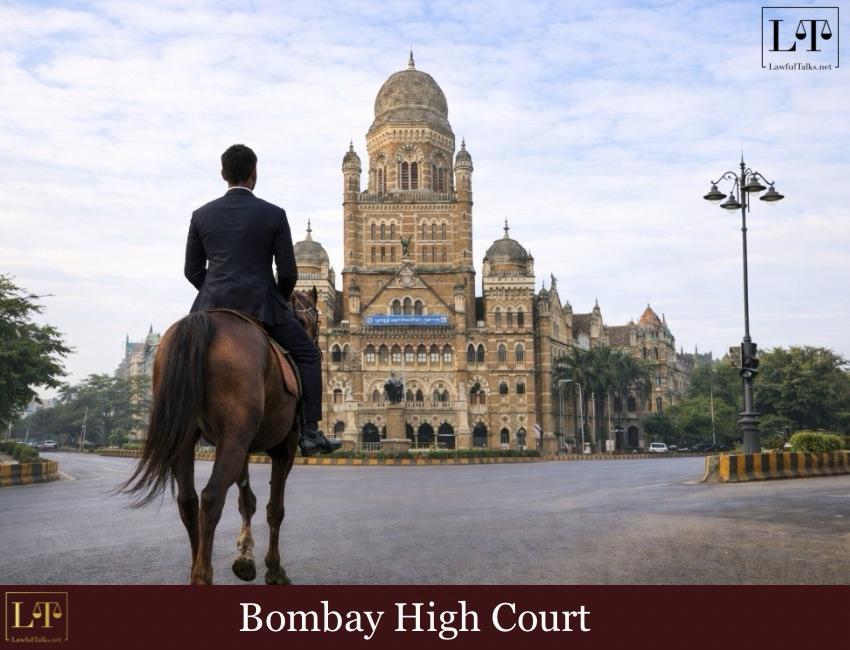
In a sharp rebuke to the Brihanmumbai Municipal Corporation (BMC) for ignoring illegal encroachments on public roads, the Bombay High Court delivered a biting oral remark. Justice Ravindra Ghuge and Justice Abhay Mantri said that if the civic body’s lax attitude continues, Mumbaikars might soon abandon cars for bicycles and horses—even the BMC chief could end up trotting to work on horseback.

The judges' frustration boiled over while hearing a matter about a 90-feet-wide road in Mumbai's upscale Hiranandani area in Powai. The road is now choked by hutments on the footpaths, blocking schoolchildren, pedestrians, and drivers alike.

Justice Ghuge’s Oral Observations:
After looking at photos of the situation, a furious Justice Ghuge declared, "Practically four cars can pass on this road but see what has happened now…It is reduced to one lane…I wonder what will happen in the coming years… People will have to give up riding motorcycles and switch to bicycles… Or best is horse… A horse can navigate well… Imagine your Commissioner (of BMC) coming to his office on a horse, how will he look." He continued, "What is happening to Mumbai? The moment a road is constructed people come and squat there… See what you are doing to your own city… Such a beautiful road this is and what have you done to it? We can call the Civic Chief or any other officer to the court and seek an explanation from them."

Case Background: School Moves High Court
The case came up from a petition filed by Beaumont HFSI Pre-primary School in Powai, which complained about widespread unauthorized hutments sprouting along the road connecting the schools to the Jogeshwari-Vikhroli Link Road (JVLR).

Petitioners Seek Removal Of Hutments:
Represented by senior advocate Naushad Engineer, the school said it had made repeated complaints and meetings with BMC officials but nothing changed."Moreover, the civic authorities are aiding and encouraging such encroachment by supplying water through their tankers and providing toilet facilities.’’

Aggrieved by the gross inaction, and in fact facilitation, the Petitioners are constrained to file the present Petition inter-alia seeking directions against the authorities to act on the complaints made by the Petitioners and to demolish/remove the unauthorised and illegal encroachments from the said Road," the plea stated.

Because four schools are nearby, the encroachments cause heavy traffic during drop-off and pick-up times, reduce the road’s width, block the footpaths, and force children and families onto busy lanes, creating a clear danger to lives.

Court Seeks Action Taken Report:
The bench gave the BMC's lawyers time to inform the court about the action taken so far and postponed the next hearing.


Case Details: BEAUMONT HFSI PRE PRIMARY AND ANR VS. MUNICIPAL CORPORATION OF GREATER MUMBAI AND 5 ORS.


Want The ‘Senior’ Gown? SC Brings Major Changes To Selection Process

The Supreme Court of India has notified the new “Guidelines for Designation of Senior Advocates by the Supreme Court of India, 2026”, which replace the earlier 2023 guidelines pursuant to the decision in Jitender @ Kalla vs State (Govt. of NCT of Delhi) and Anr., decided on 13 May 2025.

All matters relating to designation are now entrusted to a permanent “Committee for Designation of Senior Advocates” comprising the Chief Justice of India as Chairperson and the two senior-most Judges of the Supreme Court as members, assisted by a permanent Secretariat whose composition is to be decided by the Chief Justice of India in consultation with the Committee.

The Committee meets whenever the need arises, and the Secretariat acts as the working body that initiates, processes, and submits applications to the Full Court.

Initiation of the Process and Mode of Application:

The Secretariat must start the designation process at least once every year by inviting applications from advocates. A notice inviting applications is published on the Supreme Court’s official website, and information is also sent to the Supreme Court Bar Association and the Supreme Court Advocates-on-Record Association to ensure wide publicity. Applicants are given at least 21 days to submit their applications online in the prescribed Application-cum-Consent format (Annexure A), or through any other mode directed by the competent authority.

Eligibility Conditions for Advocates:

The Guidelines specify clear basic criteria that must be met to be considered for designation as a Senior Advocate.

Professional standing:

  • Minimum of ten years’ standing as an Advocate; or

  • Ten years’ combined standing as an Advocate and as a District and Sessions Judge or as a Judicial Member of a Tribunal whose eligibility requirement is not less than that for a District Judge.

  • Nature and place of practice:

  • The advocate must mainly practise in the Supreme Court.​

Advocates with domain expertise before specialised Tribunals may receive concession regarding the extent of appearances in the Supreme Court.

Age requirement:

    • The advocate must have attained the age of 45 years.​

    • The Full Court retains discretion to relax this requirement in deserving cases.​

  • Bar on recent rejection or deferment

    • The advocate’s application for senior designation must not have been rejected by the Supreme Court of India or any High Court within the two years immediately preceding the notice.​

    • Nor should such an application have been deferred by any court within the one year immediately preceding the date of notice inviting applications.

Data Collection, Transparency and Stakeholder Participation:

Once applications are received, the Secretariat compiles relevant data concerning the reputation, conduct, and integrity of the applicants, using both the information furnished in the application and additional sources identified by the Committee. The proposals are then published on the Supreme Court’s website, and suggestions or views from other stakeholders are invited, with at least fifteen days’ time allowed for responses. After this stage, the Secretariat prepares a comprehensive database and places the complete set of proposals before the Full Court for consideration.

Substantive Criteria: Ability, Standing and Special Knowledge:

The Full Court evaluates each application on an overall basis, focusing on the candidate’s ability, standing at the Bar, and special knowledge or experience in law.​

  • Ability

    • Very sound knowledge of law, particularly in the branches of law in which the advocate practises.​

    • Advocacy skills sufficient to effectively conduct a case before court.​

    • Authorship of legal articles and commentaries is treated as part of “ability”.​

    • Capacity to rationally critique judicial decisions is recognised as an aspect of ability.

No criminal antecedents and professional discipline:

  • The advocate must not have been convicted by a competent court.​

  • They must not have been punished for offences involving moral turpitude or contempt of court.​

  • They must not have been punished by any State Bar Council or the Bar Council of India for professional misconduct.

Processing before the Full Court and Mode of Decision:

All applications found eligible by the Secretariat, together with their supporting documents, are placed before the Full Court of the Supreme Court. The Full Court retains the power, even in the absence of an application, to recommend designation of a deserving advocate de hors an application, provided the advocate consents. The decision‑making process is designed to prioritise consensus; however, if consensus is not possible, the decision is taken by majority view, with voting by secret ballot permitted only in exceptional cases and for reasons to be recorded.

Special Pathway for Former Chief Justices and Judges of High Courts:

The Guidelines provide a separate, ongoing process through which former Chief Justices and Judges of High Courts can apply for designation as Senior Advocates.​

  • Eligibility and application format

    • Former Chief Justices and former Judges of High Courts may at any time submit a request‑cum‑consent letter in the prescribed Annexure J format seeking designation.​

    • Their letters must provide details such as enrolment, resumption of practice, field(s) of legal expertise, number of reported judgments delivered as judges, and the High Courts in which they served, with duration.​

  • Restriction due to full‑time assignments

    • Those who have accepted or consented to accept any full‑time assignment are not considered for designation as Senior Advocates for as long as they hold that assignment.​

  • Procedural formalities

    • Requests are submitted as paper books, duly tagged and indexed, in three identical sets, accompanied by copies of relevant certificates and lists of citations.​

    • A soft copy in searchable mode, along with the scanned photograph, must also be submitted via email to the designated registry address.​

Cooling‑off Periods, Fresh Applications and Communication of Decisions:

The Guidelines introduce fixed waiting periods before a case that was either rejected or deferred by the Full Court can be considered again.

Rejected or not favourably considered cases

  • Such cases may be reviewed or reconsidered only after two years from the date of the Full Court’s decision.​

  • Deferred cases

    • Where an application is deferred, it cannot be reconsidered until one year has passed from the date of deferment.​

  • Fresh applications and requests

    • After the expiry of the relevant period, advocates and former High Court judges must apply afresh or submit a fresh request letter, and their cases are processed under the procedure and requirements in force at that time.​

The final decisions of the Full Court are communicated individually to all applicants, ensuring clarity and closure for each candidate.​

Power to Review and Recall Designation:

The Full Court is vested with the authority to review its own decision conferring the status of Senior Advocate and to recall such designation where the advocate is found guilty of conduct that, in the Full Court’s view, disentitles them to continue as a Senior Advocate. Before such recall, the Guidelines require that an opportunity of hearing be afforded to the concerned advocate, embedding due process into the de‑designation mechanism.​

Interpretation, Removal of Difficulties and Practical Instructions:

To prevent confusion and ensure the rules are applied uniformly, the Guidelines state that any question about their interpretation or application must be referred to the Chief Justice of India, whose decision will be final.The Chief Justice may also issue general or case-specific directions to resolve difficulties in implementing the Guidelines.

On the practical side, detailed instructions are given to advocates on how to fill Annexure A and the prescribed formats L‑1 to L‑6, including requirements such as providing judgment citations in chronological order, ensuring the name matches exactly with the enrolment certificate, and adhering to time limits and file size specifications for uploads.

Former High Court judges are additionally required to follow general instructions such as using the prescribed font and spacing, properly indexing documents, and filing both physical paper-book sets and a searchable soft copy, to maintain uniformity and administrative efficiency in processing requests.

Click here to read official notification