
Loading...

Studied Gandhi Behind Bars — Life Term Reduced In POCSO Case By Bombay HC

The Bombay High Court reduced the life sentence of a man, Kalamuddin Mohammad Isteyar Ansari (also known as Koail), who was convicted of forcing a five-year-old girl to perform oral sex. The court’s decision was influenced by the fact that the appellant “successfully’’passed an exam on the ‘Thoughts of Mahatma Gandhi’ while incarcerated, alongside the consideration that he had “no other criminal antecedents.’’

A division bench of Justice Sarang Kotwal & Justice Sandesh Patil modified the sentence of Kalamuddin Mohammad Isteyar Ansari alias Koail who had been convicted by a trial court under section 6 of Protection of Children from Sexual Offences (POCSO) Act.

Case Background :

The incident involved a victim who was five years old at the time of the offence. During her examination at age eight, she stated that her mother regularly filled water through a pipe from a neighbour’s house.

The victim further stated that her mother asked her to “ bring a pot from the neighbour’s house’’. Upon entering the house, the victim testified that the accused “had inserted his private part in her mouth.’’

Following the assault, the girl came back crying and narrated the incident to her mother. After the mother relayed the account to the girl’s father, a formal report was lodged at the police station.

Judicial Observations: Mitigating Factors Considered

The Bombay High Court reaffirmed the conviction of the accused confirming that he committed offences u/s 376 of the IPC and Section 6 of the Protection of Children from Sexual Offences (POCSO) Act. However, while upholding the guilt, the Court chose to reduce his life sentence after considering several ‘mitigating factors’-

  • The accused was only 20 years old when the incident occurred.

  • He has remained in custody for more than 9 years and was not released on bail, even during Covid 19.

  • Educational Certificates: His lawyer provided certificates from Tilak Maharashtra Vidyapeeth, Ramchandra Pratisthan, Mumbai, and Mumbai Sarvodaya Mandal. These proved that he had been “studying the thoughts of Mahatma Gandhi’’ and had successfully passed an exam on the subject.

Considering this, the bench showed leniency to the accused ,choosing to modify the life sentence stating:

“We are therefore, inclined to reduce the sentence of the Accused. However, taking into consideration the gravity of the offence, we are imposing the sentence which is more than the minimum sentence of ten years. In our opinion, the sentence of twelve years would meet the ends of justice.’’
Court’s Reasoning:

The bench held that :

The conviction of the Accused under Section 376 of I.P.C. and Section 6 of the POCSO Act, vide the Judgment and Order dated 7th December 2020, passed by the learned Special Judge, under the Protection of Children from the Sexual Offences Act, 2012, at Greater Bombay, in POCSO Special Case No.120 of 2017, is maintained''.

''However, the sentence of life imprisonment is set aside''.

''Instead, the Accused is sentenced to suffer rigorous imprisonment for twelve years and to pay a fine of Rs.1,000/- for commission of offence punishable under Section 6 of the POCSO Act''.

''In default of payment of fine, he shall undergo simple imprisonment of one month. No separate sentence is imposed for offence punishable under Section 376 of the I.P.C., in view of the Section 42 of the POCSO Act.’’

Final Order:

Concluding the matter, the bench observed, “ We are therefore, inclined to reduce the sentence of the Accused. However, taking into consideration the gravity of the offence, we are imposing the sentence which is more than the minimum sentence of ten years. In our opinion, the sentence of twelve years would meet the ends of justice.’’
Case Details: Kalamuddin Mohammad Isteyar Ansari vs State of Maharashtra ( Criminal Appeal No. 315 of 2023)

Deposit Money, Get Bail? Supreme Court Says ‘Absolutely Not’

The Supreme Court has reiterated that granting regular or anticipatory bail should not be made conditional on depositing any amount. In this case, the Court set aside the bail conditions imposed by the Jharkhand High Court and ordered that the accused be released on bail if arrested. The Supreme Court also directed its Registry to send a copy of the order to the Chief Justice of the Jharkhand High Court.

Background:

According to the case summary, the two accused- a father and son- were denied anticipatory bail by the High Court in a cheating case. The complainant alleged that they bought craft papers from him but did not pay Rs. 9,00,000. An FIR was registered, after which the accused applied for bail before the Sessions Court, but their plea was rejected.

They then approached the High Court, which passed two orders directing them to file a supplementary affidavit showing payment of Rs. 9,12,926.84 to the complainant. The accused sought more time to do so, and the High Court granted the request.

In orders dated January 13, 2025, and November 14, 2025, the High Court said that if the affidavit was not filed, the anticipatory bail application would be dismissed without further notice. These orders were challenged before a bench of Justice JB Pardiwala and Justice KV Viswanathan.

Bench’s Observations:

The bench immediately observed that the High Court had passed "unusual orders," and appeared unaware of the Supreme Court's ruling in Gajanan Dattatray Gore v. State of Maharashtra (2025), where Justice JB Pardiwala and Justice R Mahadevan held that bail applications must be decided on their merits and not on the basis of the accused's assurances.

Court’s Criticism:

The bench expressed dismay that High Courts continue to pass such orders despite clear directions from the Supreme Court.

"It is very unfortunate that despite this Court saying in so many words that grant of regular bail or the anticipatory bail should not be subject to deposit of any amount, the High Court has said that the petitioners should deposit the balance amount of Rs.9,12,926.84. In our Judgment, referred to above, we made ourselves very clear that if a case for grant of bail or anticipatory bail is made out, then the Court should proceed to pass an appropriate order and if not made out, the Court may decline, however, Court should not pass a conditional order of a deposit of a particular amount and then exercise its discretion."

Final Directions:

Accordingly, the Court directed that they be released on bail upon arrest, subject to conditions fixed by the investigating officer.

Case Details: PRANTIK KUMAR & ANR v. THE STATE OF JHARKHAND & ANR. [SPECIAL LEAVE PETITION (CRIMINAL) Diary No.4297/2026]

“Rigged Auction?” Bombay HC Cancels Vile Parle Property Sale, Forfeits Bidders’ Deposits

The Bombay High Court has ordered a fresh valuation of a prime property in Mumbai’s Vile Parle after finding that the earlier auction process was manipulated. The court noted that the bidders allegedly acted as a syndicate and deliberately quoted lower prices to suppress the property’s value.

Fresh Auction Ordered, EMD Forfeited:

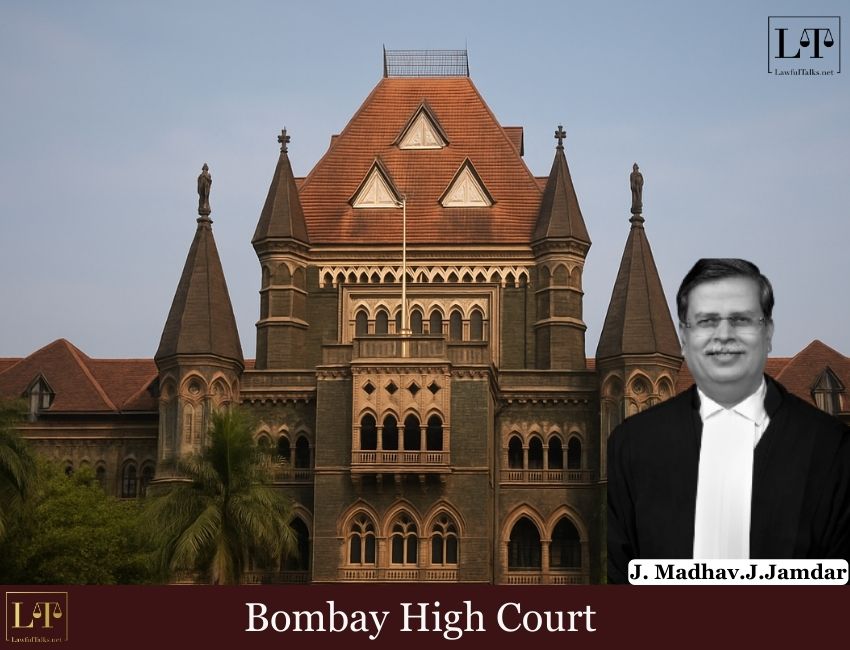
Single Judge Justice Madhav Jamdar directed that a new auction be conducted. The court also ordered that the ₹10 lakh Earnest Money Deposit (EMD) submitted by each of the five bidders will be forfeited until further orders.

Deputy Sheriff of Mumbai Mr. Choudhari submitted Sheriff’s Report No. 6 of 2026, stating that the terms and conditions of the sale were finalised at a meeting held on January 14, 2026. Following this, an Auction Sale Notice was published in the newspapers Free Press Journal and Nav Shakti on January 22, 2026.

Bidders & Initial Price Offers:

The report further recorded that inspection of the suit property was made available to prospective bidders on January 28 and 29, 2026. In response to the said advertisement, the Sheriff’s Office received bids along with an Earnest Money Deposit (EMD) of ₹10,00,000 each from the following bidders:

  1. Pinakin Chitalia – Rs 1 Crore

  2. Rushi Ajmera – Rs 90 lakhs

  3. Anay Nayan Shah – Rs 1 Crore

  4. Kushal Shah – Rs 85 lakhs, and

  5. M/s. Swarnim Gems & Jewelers Pvt. Ltd. – Rs 6.03 crores.

The lawyer for Bidder No.1 informed the Court that Bidder No.1 was not willing to increase his offer. Bidder No.2 and Bidder No.4also took the same stand.

However, Bidder No.3, who had first offered ₹1 crore, kept raising his bid to ₹8.25 crore, then ₹8.75 crore, and finally ₹9.50 crore. Mr. Mahesh Soni, Director of Bidder No.5 – M/s Swarnim Gems & Jewelers Pvt. Ltd., increased the bid from ₹6.03 crore to ₹8.50 crore, then ₹9 crore, and finally ₹9.75 crore.

Before making the final bid of ₹9.75 crore, Mr. Soni took the Court’s permission to step outside briefly to consult another director. Meanwhile, Bidder No.3 left the courtroom without the Court’s permission after placing his last bid of ₹9.50 crore.

After returning to the courtroom, Bidder No.5 made the final offer of ₹9.75 crore, and Bidder No.3 stated that he did not want to make any further offer.

Court: Sanctity Of Auction Lost

"This is a Court Auction and therefore, sanctity of the process of the Court Auction has to be maintained. The manner in which Mahesh Soni, Director of M/s. Swarnim Gems & Jewelers Pvt. Ltd. (Bidder No.5) and Anay Nayan Shah (Bidder No.3) have conducted themselves and participated in this Court Auction, clearly shows that sanctity of the Court Auction is completely lost. The same clearly shows that this Court Auction is affected by formation of syndicate and under-bidding," the judge held in the order.

The judge noted that Neelam Arch, Architect, Consulting Engineer, Surveyor and Government Property Valuer, had submitted a valuation report dated December 19, 2025. The report valued the 852.50 sq. mtr. plot at ₹64.47 lakh. Considering this valuation and the prime location of the property, Justice Jamdar held that the valuer had grossly “undervalued” the plot.

The Court also firmly held,"It is also required to be noted that the plot in question is at JVPD Scheme, Vile Parle, Mumbai – 400 056 which is a very prime residential area in Mumbai. Not only the Valuation Report valuing the property at Rs.64,47,300/- is grossly undervaluing the property, however, the bids submitted by some of the bidders show that there is high probability that they were knowing the Valuation Report. It is required to be noted that the initial offer of Bidder No.5 was Rs.6.03 Crores and the same was increased to Rs.9.75 Crores. Thus, it is obvious that the other Bidders have given very low offers compared to the market price. Thus, in the facts and circumstances, the possibility of the formation of syndicate just to make a show of competition, cannot be ruled out."

The court observed that several bids, especially those made by Bidder Nos. 1 to 4, were much lower than the market price. Only Bidder No.3, Anay Nayan Shah, increased his bid to ₹9.50 crore.

The bench also noted that Bidder No.1, Pinakin Chitalia, had intended to offer ₹15 crore but was asked to “keep quiet”.

Entire Bidding Process Rigged’:

Based on these facts, Justice Jamdar remarked, “Thus, the conduct of all the Bidders noted herein, shows that the entire bidding process has been rigged,”

Therefore the judgement held ,"This is a Court Auction. The properties are to be sold by the Court Auction to ensure that maximum price is fetched. The conduct of all the Bidders noted herein, clearly show that the entire auction process is rigged. Accordingly, in the facts and circumstances, EMD of Rs 10 lakhs, which has been offered by each of the Bidders is forfeited. The same be at present invested in a Nationalised Bank for a period of 6 months. After the subject property is sold in Court Auction conducted in accordance with law, further direction regarding said forfeited amount can be given."

Court’s Order:

For the aforesaid reasons, the entire process of sale of the subject property through Court Auction was quashed and set aside. The Deputy Sheriff of Mumbai was directed to submit a fresh report after obtaining a fresh valuation. Accordingly, Sheriff’s Report No. 6 of 2026 was disposed of in the above terms.

Case Title: Anuradha Nayan Shah vs Jayantilal Vallabhdas Patni (Execution Application 163 of 2005)


“Single Phone Call Not Enough: Bombay HC Gives Big Relief In Baba Siddique Case”

In an important ruling in the Baba Siddique assassination case, the Bombay High Court granted bail to 22-year-old Akashdeep Karaj Singh, saying there was no initial evidence directly tying him to the Anmol Bishnoi-led crime syndicate.

Justice Neela Gokhale passed the order on Singh's bail plea after he was arrested by Mumbai police under the Maharashtra Control of Organised Crime Act (MCOCA) for alleged links to the gang leader and his network.

“Undoubtedly, the acts committed by the Organised Crime Syndicate, alleged to be headed by the Bishnoi brothers, are serious offences. The provisions of MCOCA are rightly invoked,” the Court held.

After examining the evidence, Justice Gokhale said there were not enough grounds to treat the MCOCA charges against him as prima facie valid.

“I am unable to form an opinion that there are reasonable grounds, at this stage, for believing that the accusations against Singh of commission of the offence under the MCOCA are prima facie true,” the Court stated.

Prosecution’s Evidence Found Insufficient:

Prosecutors argued that Singh was actively involved in the syndicate. They pointed to phone calls to co-accused Sujit Singh, some unclear international calls, a photograph of him holding a gun, and a cash deposit in Punjab that was transferred to a Mumbai account. However, the judge ruled this was not enough to apply the strict bail restrictions under Section 21(4) of MCOCA.

“Merely putting through a call to the co-accused prima facie does not connect Singh with the organised crime syndicate, unless it is demonstrated that Singh had knowledge of the co-accused being engaged in assisting in any manner, an organised crime syndicate. This fact can be established only during the trial,” the Court held.

The judge also noted that investigators could not identify who received the international calls:

“A bare allegation unsupported by any material that the Applicant made international calls to supporters of the Organised Crime Syndicate in Canada, does not indicate his complicity in the offence.”

Bail Granted With Strict Conditions:

Considering Singh’s young age, clean record, and the limited alleged link based mainly on a single call, the Court granted bail with strict conditions — a ₹1 lakh bond with local sureties, mandatory reporting to prosecutors every alternate Monday, and he cannot leave Maharashtra without permission.


Case Details: Akashdeep Karaj Singh v. State of Maharashtra & Ors